Food tours have become a popular way for travelers to discover local flavors, traditional dishes, and hidden culinary spots through guided experiences. From street food walks to cultural dining tours, these experiences require smooth coordination between guests, guides, schedules, and reservations.
Food tour booking software helps businesses create a seamless booking journey while handling essential tasks such as online reservations, availability updates, payment collection, guest details, and tour schedules. With the right platform, operators can improve customer convenience, reduce manual tasks, and deliver better-organized culinary experiences.
In this guide, we compare the 10 best food tour booking software, covering their features, pricing, and key benefits to help you select the right solution for your food tour business.
(Methodology: We evaluated each platform using official product pages, pricing information, feature documentation, and its relevance to food tour operations. The comparison focuses on booking management, guide coordination, dietary data collection, distribution options, mobile tools, pricing, and overall ease of use.)
Table of contents
Key Highlights
- Food tour booking software is a reservation system that helps food tour operators manage online bookings, schedules, payments, guest information, and availability from a single platform.
- The best booking software for food tour companies includes WP Travel, Bookeo, Bókun, TicketingHub, Rezdy, Tashi, TripWorks, Beyonk, Roverd, and CaptainBook.
- The right food tour booking software should collect dietary preferences, update tour capacity in real time, synchronize bookings across all sales channels, and support mobile operations for guides managing tours on the go.
Quick Comparison of Best Food Tour Booking Software
The table below summarizes the ideal use case, notable capability, and starting price of each platform. Use it to narrow your options before reviewing the complete provider sections.
| Software | Best For | Standout Capability | Starting Price | Rating |
|---|---|---|---|---|
| WP Travel | WordPress-based food tour websites | On-site tour content and booking management | Free; paid plans from $99 per year | 4.7/5 from 163 reviews on WordPress.org |
| Bookeo | Complex and multi-location tour operations | Flexible schedules, pricing, and booking rules | $39.95 per month | 4.3/5 from 103 reviews on Capterra |
| Bókun | Reseller and OTA distribution | Marketplace and partner-sales ecosystem | Free plan; paid plans from $49 per month plus fees | 4.7/5 from 463 reviews on Capterra |
| TicketingHub | Multichannel ticket sales | Direct, reseller, and marketplace booking management | 3% per transaction | 4.9/5 from 40 reviews on Capterra |
| Rezdy | Growing food tour companies | Operations and distribution in one account | $49 per month plus a 3% online booking fee | 4.5/5 from 237 reviews on Capterra |
| Tashi | Private and customized food tours | Branded proposals for inquiry-led bookings | $29 per month | 5.0/5 from 25 reviews on Capterra |
| TripWorks | Tour-day operations and payments | Mobile management, manifests, and flexible payment collection | No monthly fee; 6% booking fee | 4.8/5 from 46 reviews on Capterra |
| Beyonk | Ticketed culinary events | Recurring and multi-day event scheduling | 4% booking fee | 4.9/5 from 167 reviews on Capterra |
| Roverd | Straightforward direct and reseller sales | Dietary data collection and live availability | No monthly fee; 5% booking fee | Not yet rated on Capterra |
| CaptainBook | OTA synchronization and partner sales | Connected inventory across direct and third-party channels | €49 per month | 5.0/5 from 11 reviews on Capterra |
You may also read: Best Booking Software for Bike Tours
10 Best Food Tour Booking Software
The best food tour booking software includes WP Travel, Bookeo, Bókun, TicketingHub, Rezdy, Tashi, TripWorks, Beyonk, Roverd, and CaptainBook. These platforms help food tour operators manage online bookings, schedules, payments, availability, and customer communication while supporting direct bookings and third-party sales channels.
1. WP Travel
WP Travel keeps the entire food tour booking process inside an operator’s WordPress website. Tour descriptions, tasting schedules, prices, guest inquiries, availability, payments, and reservations can all be managed from the familiar WordPress dashboard. Customers remain on the company’s branded site while exploring a market walk, restaurant-hopping tour, cooking experience, or private culinary itinerary.
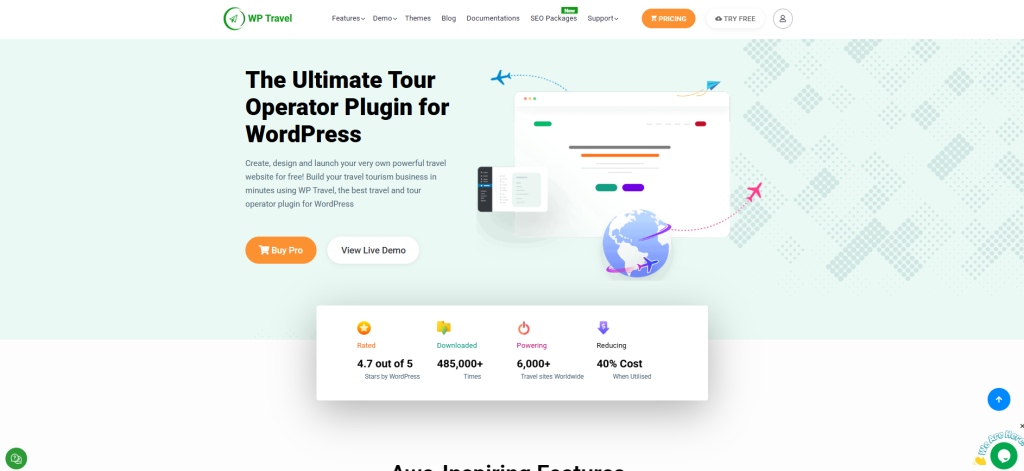
Its customizable forms are particularly useful for collecting food-tour information. Operators can add fields for allergies, dietary restrictions, accessibility requirements, meal preferences, or individual participant details. Each tour can also follow its own schedule, capacity, pricing structure, checkout questions, and optional extras, making the plugin suitable for independent culinary guides and small food tour companies that want more ownership of their direct sales channel.
Features
- Day-by-day food tour itinerary builder
- Interactive route and meeting-point maps
- Tour image galleries and video displays
- Structured trip-facts sections
- Frequently asked questions for each tour
- Downloadable menus, route guides, and tour documents
- Customer account dashboard
- Access to previous and upcoming reservation records
- Guide assignment for individual food tours
- Google Calendar integration
- Automated PDF invoice generation
- Coupon and promotional campaign management
- Tax configuration tools
- Customer review and rating collection
- Reports for bookings, revenue, destinations, and best-selling tours
| Pros | Cons |
|---|---|
|
|
Pricing
WP Travel offers a Free plan with basic features and three paid plans: Personal ($99/year), Plus ($199/year), and Expert ($599/year).
2. Bookeo
Bookeo helps food tour companies manage shared departures, private tastings, and special group experiences from one reservation system. Operators can set different schedules, durations, capacities, and booking rules for each tour. This works well for businesses offering market walks, restaurant-hopping tours, cooking experiences, or corporate food events.
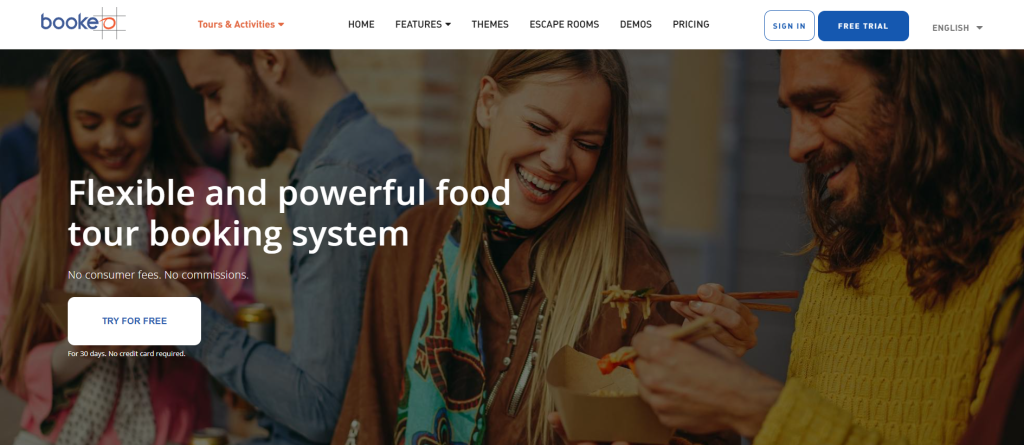
Customers can check live availability and complete their reservation through an embedded website widget or a branded booking page. Bookeo also supports mobile bookings and businesses operating across multiple locations. This gives both independent guides and growing food tour companies a flexible way to manage direct reservations.
Features
- Automated branded booking confirmations
- Pre-tour email and SMS reminders
- Post-tour review request emails
- Customer self-service cancellations and rescheduling
- Guide and vehicle rostering
- Phone and on-the-go booking entry
- Integrated point-of-sale payments
- Google Calendar, iCal, Outlook, and Office 365 synchronization
- Custom participant intake forms
- Booking terms and cancellation policy acceptance
- Seasonal, peak, and off-peak pricing
- Tour extras and merchandise upsells
- Automated waitlist notifications
- Online and in-store gift vouchers
- OTA and distribution-channel connectivity
| Pros | Cons |
|---|---|
|
|
Pricing
Bookeo offers Tours & Activities plans starting at $39.95/month, with higher tiers available at $79.95/month and $119.95/month, plus a 30-day free trial with no credit card required.
3. Bókun
Bókun is a strong option for food tour companies that want to increase sales through hotels, restaurants, travel agents, OTAs, and other tourism partners. Its Marketplace and referral tools allow operators to establish reseller relationships, track partner-generated reservations, and create packages with complementary local experiences.
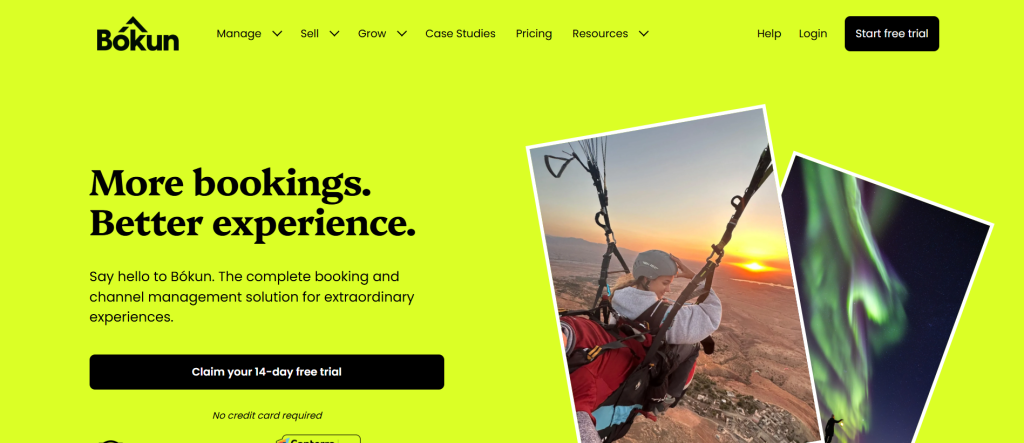
Its connection with Tripadvisor and Viator also gives culinary tour operators a useful distribution advantage. Existing Viator products can be imported, while TripAdvisor reviews can be displayed across connected listings. This makes Bókun particularly relevant to food tour businesses seeking greater visibility among travelers who book experiences through established travel platforms.
Features
- Custom booking forms for allergies and dietary requirements
- Date-and-time scheduling for tasting departures
- Minimum and maximum guest capacity settings
- Advance booking cutoffs for food preparation
- Automatic future availability rules
- Real-time inventory updates across sales channels
- Adult, child, group, and private-tour pricing
- Automated dynamic pricing rules
- Guide, vehicle, and equipment allocation
- Food pairings and optional experience add-ons
- Automated confirmations, tickets, and reminder emails
- Customer self-service booking modifications
- Mobile passenger manifests and ticket scanning
- Online payment links and digital wallet support
- Sales, product, partner, and channel reports
| Pros | Cons |
|---|---|
|
|
Pricing
Bókun offers a Free plan along with paid plans: Start ($49/month + 1.5% booking fee), Plus ($149/month + 1.25% booking fee), and Premium ($499/month + 1% booking fee).
4. TicketingHub
TicketingHub is a practical option for food tour companies that sell through their website, local partners, front-desk staff, and travel marketplaces. Its branded checkout supports direct reservations, while reseller portals and white-label widgets allow hotels, restaurants, and affiliates to sell available tour spaces. Bookings from connected channels can be managed within the same system.
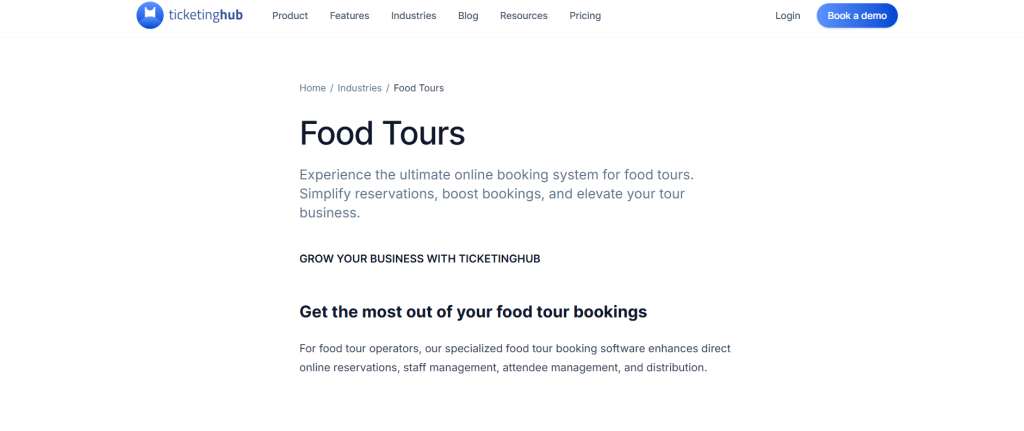
The platform also supports businesses operating across multiple locations, currencies, and regional markets. Operators can manage different tour schedules, ticket categories, partner sales, and customer records without creating separate booking setups for every destination. This makes TicketingHub relevant to both local food tour companies and expanding multi-city operators.
Features
- Custom questions for food allergies and dietary requirements
- Separate information collection for each participant
- Customer self-service rescheduling and cancellations
- Booking conversion into future-use vouchers
- Automated email and SMS tour reminders
- Customer email address validation
- Abandoned checkout recovery campaigns
- Waiting lists with preferred-date selection
- Broadcast messages for waitlisted guests
- Seasonal ticket pricing
- Food pairings, merchandise, and optional extras
- Multi-experience package creation
- Detailed guest lists and tour manifests
- Automatic staff assignment by availability and skills
- Separate booking cutoffs for confirmed and unconfirmed departures
| Pros | Cons |
|---|---|
|
|
Pricing
TicketingHub charges a 3% fee per transaction with no monthly fees, setup costs, or long-term contracts.
5. Rezdy
Rezdy is a food tour reservation system that helps operators manage direct bookings, reseller sales, tour schedules, and guest information from one account. It can support tasting walks, market tours, brewery visits, cooking experiences, and private culinary tours with different capacities and pricing rules.
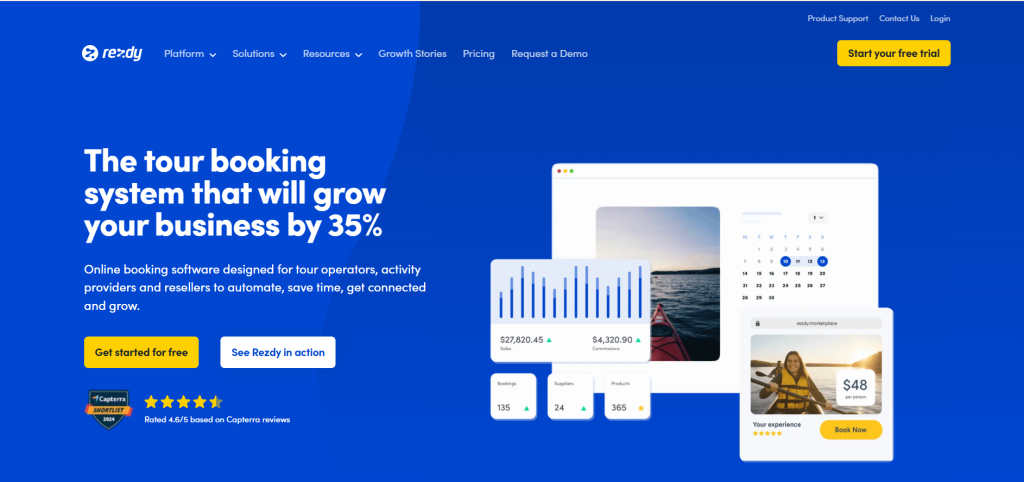
Operators can collect dietary requirements and meal preferences from each participant during checkout. Rezdy also connects food tour businesses with travel agents, hotels, OTAs, and other distribution partners. This makes it a practical option for companies that want to organize daily operations while expanding their reach across multiple sales channels.
Features
- Participant-specific dietary requirement fields
- Custom questions for allergies and meal preferences
- Mobile QR-code ticket scanning
- Individual and group check-in
- No-show and attendance tracking
- Automated email and SMS notifications
- Add-ons for tastings, drinks, or merchandise
- Tour packages and combination experiences
- Gift cards and promotional codes
- Walk-in and phone booking entry
- Customer profiles and booking history
- Sales, session, and channel performance reports
| Pros | Cons |
|---|---|
|
|
Pricing
Rezdy offers three plans: Foundation ($49/month), Accelerate ($99/month), and Expansion ($249/month), with each plan including a 3% fee per online booking and a 21-day free trial.
6. Tashi
Tashi is a food tour booking software that supports instant reservations and inquiry-led private experiences. Operators can turn corporate events, family tastings, and custom food tours into branded proposals. Each proposal can include itinerary details, group size, pricing, and an online payment option.
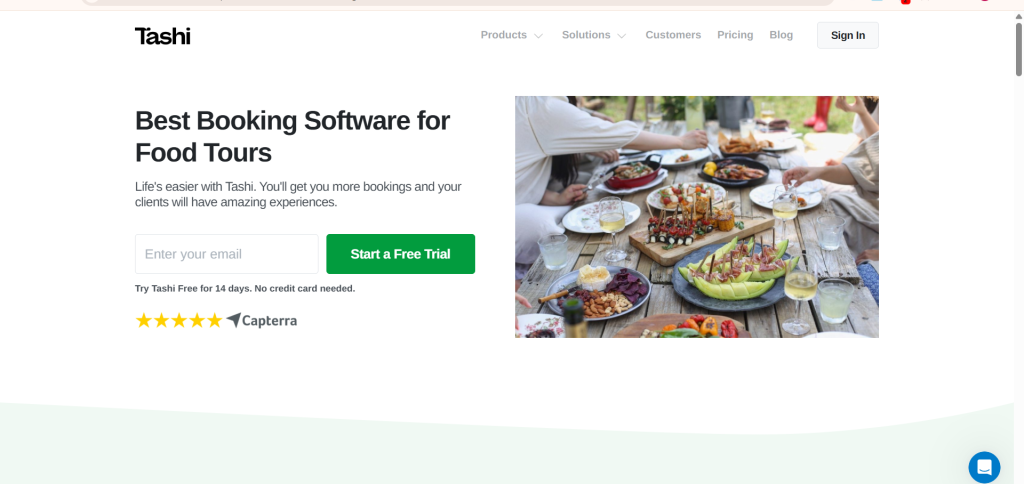
This booking flow suits companies selling scheduled departures alongside personalized culinary packages. Tashi keeps inquiries, proposals, customer details, bookings, and payments within one system. As a result, teams can manage each request without moving information between separate sales and reservation tools.
Features
- Embeddable Book Now website button
- One-click tour website builder
- Mobile-friendly booking and checkout
- Live tour availability and pricing
- Online payment gateway integrations
- Automated booking confirmation emails
- Customizable pre-tour guest emails
- Automated post-tour follow-up messages
- Promotional coupons for future tours
- Customer surveys and review collection
- Food upgrades and add-ons during checkout
| Pros | Cons |
|---|---|
|
|
Pricing
Tashi starts at $29 per month for its tour management hub and booking engine. A 14-day free trial is available without a credit card.
7. TripWorks
TripWorks brings food tour bookings, guide schedules, guest check-ins, and day-of operations into one system. Teams can manage tasting walks, market tours, private dining experiences, and multi-stop culinary routes. Staff can also update reservations from mobile devices while guides work away from the office.
Its operational tools focus on keeping departures organized when guest numbers and schedules change. Real-time dashboards show booking activity, while TripWorks AI surfaces useful guest details during reservation management. Operators can also import existing bookings, payments, activities, and offer codes before launching the platform.
Features
- Conversion-focused website booking widgets
- Dynamic and seasonal pricing rules
- Minimum and maximum capacity controls
- Abandoned booking recovery
- Digital and physical gift cards
- Promotional campaign management
- Point-of-sale bookings and upgrades
- Reseller and affiliate commission management
- Customer self-service portal
- Automated email and SMS reminders
- Outstanding balance collection
- Tips for guides and staff
- Real-time manifests and resource views
- Payment and refund management
- Reports, webhooks, APIs, and external integrations
| Pros | Cons |
|---|---|
|
|
Pricing
TripWorks has no monthly platform fee. Instead, it charges a 6% booking fee, plus credit card processing charges. The platform also offers a 2-day free trial.
8. Beyonk
Beyonk approaches food tour reservations through a ticketing model rather than a standard appointment calendar. A tasting event can run once, repeat several times daily, or continue across several days. Operators can define clear start and end times for each session. This structure suits brewery tours, culinary festivals, supper clubs, and food trails that need controlled guest flow.
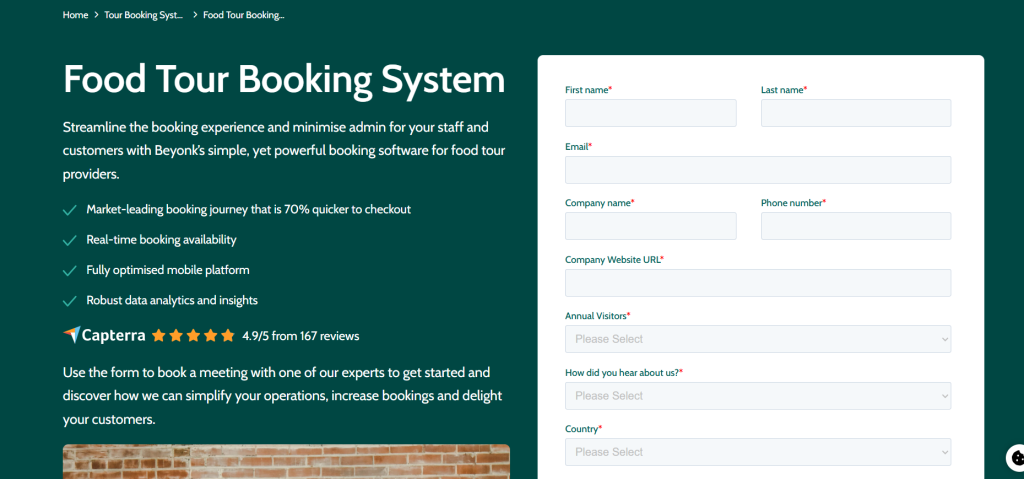
The booking journey also covers preparation and post-tour engagement. Food companies can collect allergy details before arrival and gather feedback after the experience. They can also encourage social follows and future bookings. Its mobile-optimized checkout supports travelers booking while already exploring a destination.
Features
- Instant booking and prepaid request options
- Shopping cart for multiple food experiences
- Gift voucher sales and redemption
- Discount and affiliate booking codes
- QR-code ticket scanning
- Booking cancellation and amendment controls
- Digital waiver collection
- Customer self-service booking management
- Electronic point-of-sale ticket sales
- Membership and visitor pass management
- Square and Epos Now integrations
- Zapier workflow connections
- Sales and customer analytics
| Pros | Cons |
|---|---|
|
|
Pricing
Beyonk charges a 4% booking fee, which can be passed on to customers or absorbed by the business, with no fixed monthly fees. You can also upgrade to the Ticketing + Marketing package for an additional 1% fee or choose custom marketing services starting from £1,250/month.
9. Roverd
Roverd focuses on the details that food tour operators need before guests arrive. Custom booking fields can collect allergy information, dietary preferences, and special requests. This gives guides and food partners enough time to prepare each tasting experience properly.
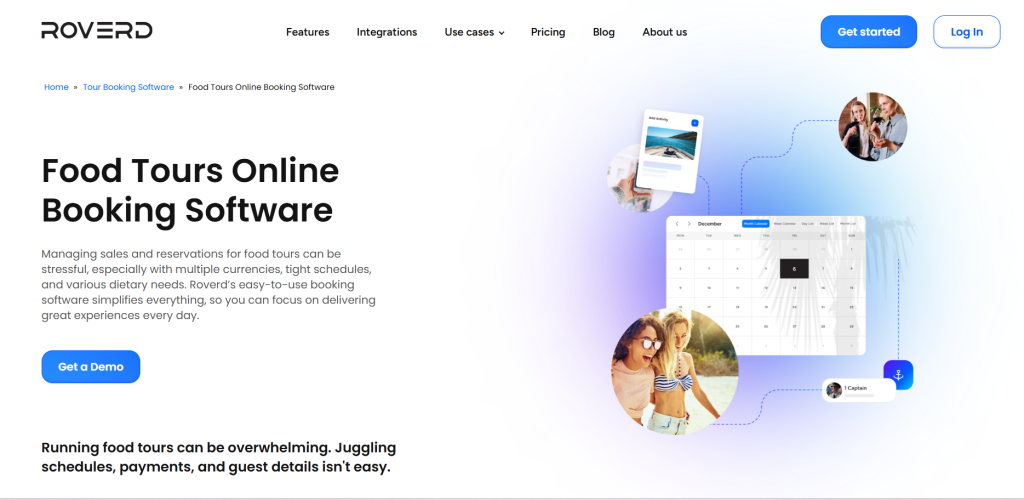
The platform also keeps direct, reseller, and marketplace bookings within one availability system. Operators can manage several routes, seasonal departures, currencies, and cancellation rules without updating each channel separately. Its booking widget can sit directly on the company website and support mobile reservations.
Features
- Custom allergy and dietary requirement fields
- Embeddable website booking widget
- Mobile-friendly online checkout
- Real-time tour availability
- Multiple routes and departure management
- Seasonal scheduling controls
- Automated booking confirmations
- Email and SMS guest reminders
- QR-code tickets and mobile check-in
- Guide scheduling and availability tracking
- Group pricing and special offers
- Online gift card sales
- Reseller commission management
- Cancellation and refund processing
- Sales and operational reporting
| Pros | Cons |
|---|---|
|
|
Pricing
Roverd has no monthly subscription fees and charges a 5% fee per successful online booking, with custom pricing available for enterprise businesses.
10. CaptainBook
CaptainBook connects a food tour’s website, mobile sales, hotel partners, and OTA listings to the same live inventory. When a tasting route sells through Viator, GetYourGuide, a local concierge, or the operator’s own booking widget, availability updates automatically across the connected channels. This arrangement helps protect limited spaces without requiring staff to adjust several calendars manually.
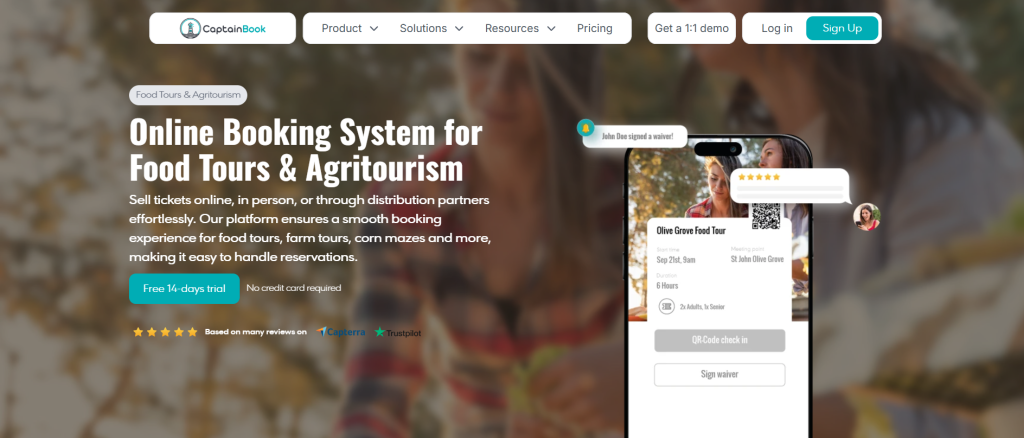
Guest preparation can begin before the group reaches its first tasting stop. Custom forms allow operators to request dietary restrictions, allergies, and other participant information, while guide scheduling, triggered notifications, waivers, and mobile check-in tools support the remaining workflow. The mobile app also lets staff review live availability and process walk-up reservations or payments while working away from the office.
Features
- Custom forms for dietary restrictions and allergies
- Embeddable website booking widget
- Real-time capacity across multiple food tours
- Live inventory access through the mobile app
- Walk-up and staff-entered reservations
- Mobile and in-person payment collection
- QR-code ticket scanning and guest check-in
- Integrated digital waivers
- Automated email, SMS, and push notifications
- Automatic guide assignment with Google Calendar synchronization
- Staff roles and detailed permission controls
- Viator and GetYourGuide booking synchronization
- Channel-specific price markups
- Hotel, travel-agency, and affiliate selling tools
- Discount codes and customizable gift certificates
| Pros | Cons |
|---|---|
|
|
Pricing
CaptainBook offers three pricing plans: Starter (€49/month), Extended (€199/month), and Ultra (€349/month), all with a 14-day free trial and 0% fees on direct bookings. Eligible OTA bookings incur 2.5%–3.5% booking fees, and custom pricing is available for enterprise businesses.
You may also read: Best Walking Tour Booking Software
How to Choose the Best Food Tour Company Booking Software?
The best booking software should match how your food tour business operates. It should support your tour types, guest needs, sales channels, and pricing model.
Consider the following points before choosing a platform.
1. Match the Software With Your Tour Format
Food tour companies often sell shared walks, private tastings, cooking classes, market visits, and corporate events.
Choose software that lets you set separate schedules, prices, group limits, and booking rules for each experience.
2. Check Dietary and Allergy Fields
Food tours need more guest details than standard sightseeing tours.
Your booking form should collect allergies, dietary preferences, meal choices, and other special requests. This gives your guides and food partners enough time to prepare.
3. Review Capacity and Booking Cutoffs
Restaurants and vendors often need an accurate guest count before the tour starts.
Look for tools that support minimum group sizes, maximum capacity, waitlists, and advance booking cutoffs. These controls can reduce waste and last-minute issues.
4. Test the Customer Booking Process
Customers should quickly find a date, select tickets, add guest details, and complete payment.
Test the booking form on desktop and mobile devices. A slow or confusing checkout may lead to abandoned reservations.
5. Compare Sales Channel Support
Your business may receive bookings through its website, hotels, restaurants, travel agents, and online travel agencies.
Choose a system that updates availability across every connected channel. Real-time syncing reduces double bookings and manual calendar updates.
6. Check Guide and Resource Management
Some food tours depend on guides, vehicles, kitchen spaces, restaurant tables, or tasting equipment.
Your software should let you assign these resources to each departure. Clear allocation can prevent schedule conflicts.
7. Review Payment Options
Check whether the system supports cards, digital wallets, payment links, deposits, refunds, and in-person payments.
You should also confirm which currencies and payment gateways it accepts. This matters when you serve international travelers.
8. Compare the Total Cost
Do not compare platforms by monthly price alone.
Review subscription fees, booking commissions, payment charges, OTA fees, setup costs, and paid add-ons. A low monthly plan may become expensive as bookings increase.
9. Look at Guest Communication Tools
Automated emails and SMS messages can reduce missed tours and late arrivals.
Useful options include booking confirmations, meeting-point details, dietary reminders, payment requests, cancellation notices, and post-tour follow-ups.
10. Check Reporting and Customer Data
The software should show revenue, bookings, popular tours, busy dates, and top sales channels.
Customer records can also help you identify repeat guests and promote similar food experiences later.
You may also read: Best Tour Operator Software
Conclusion
Each food tour booking platform supports a different business model. Bókun, TicketingHub, Rezdy, and CaptainBook are useful for OTA and reseller sales, while Bookeo suits complex scheduling. TripWorks focuses on tour-day operations, Tashi on private proposals, and Beyonk on ticketed culinary events.
For food tour companies using WordPress, WP Travel is the best overall choice. It allows operators to manage tour pages, itineraries, availability, traveler details, inquiries, payments, and bookings from the WordPress dashboard. Customers can complete their reservations on the company’s own website without being redirected to an external booking platform.
WP Travel also offers an affordable and flexible pricing structure. Businesses can begin with the free version or choose WP Travel Pro without paying a fee for every booking. This can provide better long-term value as reservation volume grows.
Operators also retain greater control over their website design, tour content, booking forms, pricing, customer journey, and business data. For WordPress-based food tour companies seeking a customizable and cost-effective solution with no ongoing booking charges, WP Travel is the strongest recommendation.
Ready to take bookings directly from your own site? Try WP Travel Pro today!

FAQs
1. Do I need technical knowledge to set up and use food tour booking software?
Most platforms are designed for non-technical users and provide setup guides, onboarding assistance, tutorials, and customer support.
2. Can I try the food tour booking software before purchasing a paid plan?
Many providers offer a free trial, free demo, or free plan. Use this opportunity to test the booking process, dashboard, payment tools, and mobile features.
3. Can I add the booking software to my existing food tour website?
Most platforms provide a booking widget, button, plugin, or reservation link that can be added to an existing website.
4. Can I manage food tours in multiple locations from one account?
Some platforms support multiple destinations, schedules, currencies, languages, and staff teams within the same account.
5. Can I upgrade or change my software plan as my food tour business grows?
Most providers allow operators to upgrade when they need more features, users, locations, or booking capacity. Check the provider’s rules for downgrades and cancellations as well.

Yam Chhetri is a WordPress expert specializing in travel plugins, themes, and website solutions. With 10+ years of experience, he helps tour operators and travel agencies find the best tools to build high-performing travel websites.
Yam provides expert insights on WordPress tour booking plugins, and travel website enhancements, helping businesses choose the right solutions. His in-depth plugin comparisons and industry analysis make it easier for travel entrepreneurs to navigate the digital landscape.