Finding high-quality travel images is important for every travel blogger, tour operator, travel agency, and tourism website. The right visuals can make your destination pages, tour packages, blog posts, and social media content more attractive and professional.
However, not every image available online is free to use. Using random photos from Google can create copyright issues, so it is better to use trusted stock photo sites that provide royalty-free travel images for websites, blogs, ads, and marketing materials.
In this guide, we have listed the best stock photo sites for royalty-free travel images, including both free and paid platforms. These websites can help you find beautiful destination photos, adventure images, hotel and resort pictures, nature shots, city views, and other travel stock photos for your online travel business.
(Methodology: To prepare this list, we reviewed popular free and paid stock photo sites based on image quality, travel image variety, licensing terms, commercial usage rights, attribution requirements, search filters, and pricing options. We also considered how useful each platform is for travel blogs, agency websites, tour pages, and marketing content.)
Table of contents
Key Highlights
- Royalty-free travel images are photos or media files you can use after getting the right license. You do not need to pay each time the image appears, but you still need to follow the license rules.
- The best stock photo sites for travel imagery are Shutterstock, Getty Images, Unsplash, Pexels, Adobe Stock, iStock, Pixabay, Depositphotos, Dreamstime and Alamy.
- Image quality, license type, commercial usage rights, attribution rules, search filters, and pricing are important factors before choosing any stock photo site.
- Free stock photos work well for basic content, while paid royalty-free images are better for ads, hero sections, tour booking pages, and professional travel marketing.
How to Choose the Best Stock Photo Site for Travel Images?
Choosing the best stock photo site for travel images depends on how you plan to use the photos. Before downloading any image, check the quality, license, usage rights, attribution rules, search features, and pricing.
1. Image Quality
Choose a site that offers clear, high-resolution, and natural-looking travel images. The photos should match your topic, such as destinations, hotels, beaches, tours, cities, or cultural experiences. Avoid images that look too staged or overused.
2. License Type
Check the license before using any image. Some royalty-free images allow broad use, while others have limits. A good stock photo site should clearly explain where and how you can use each image.
3. Commercial Usage Rights
If you run a travel business, choose images that allow commercial use. This lets you use them on websites, ads, brochures, tour pages, and social media. Also, check extra rules for photos with people, private places, logos, or landmarks.
4. Attribution Requirements
Some sites require credit to the photographer or platform. Others allow use without credit. If you want a clean website layout, choose images with no attribution requirement. Still, always check the rules before publishing.
5. Search and Filter Options
Good search filters help you find the right image faster. Look for filters by location, orientation, color, image type, people, and license. This is useful when you need blog banners, destination images, or tour page visuals.
6. Pricing and Download Limits
Compare free and paid plans before choosing a site. Free sites are good for basic use, while paid sites often offer better quality, more choices, and clearer licenses. Also, check how many images you can download each month.
You may also read: How to Create A Travel Website Using WordPress?
Quick Comparison of the Best Stock Photo Sites for Travel Images
The comparison table below gives a quick overview of the best stock photo sites for travel images based on their use case and licensing model. This helps you choose the right platform depending on whether you need free blog images, premium travel photos, editorial visuals, or commercial marketing assets.
| Stock Photo Site | Best For | Licensing Model |
|---|---|---|
| Shutterstock | Professional travel images, vectors, videos, editorial visuals, and marketing campaigns | Standard and Enhanced licenses for paid creative assets; editorial content follows separate editorial terms |
| Getty Images | High-end travel visuals, editorial publishing, luxury tourism campaigns, and destination marketing | Royalty-free, rights-managed, and rights-ready licensing, depending on the selected asset |
| Unsplash | Natural travel photography for blogs, websites, and digital content | Unsplash License allows free commercial and non-commercial use; attribution is not required |
| Pexels | Free travel photos and videos for blogs, websites, social media, and reels | Pexels License allows free personal and commercial use; attribution is not required, and editing is allowed |
| Adobe Stock | Travel marketing visuals, stock photos, videos, templates, and design assets | Standard, Enhanced, and Extended licenses, depending on asset type and usage needs |
| iStock | Affordable premium travel photos, illustrations, vectors, and videos | Standard License for regular downloads, with optional Extended Licenses for broader rights |
| Pixabay | Free travel images, videos, vectors, illustrations, and music | Pixabay Content License allows free use, with restrictions on standalone resale, redistribution, trademarks, logos, and brands |
| Depositphotos | Budget-friendly travel images, vectors, videos, and marketing content | Standard and Extended licenses for paid files; editorial-use-only files have limited use |
| Dreamstime | Travel photography, editorial visuals, vectors, videos, audio, and commercial creative projects | Royalty-Free, Editorial, and Extended licenses; free and public domain files may have separate terms |
| Alamy | Authentic travel photography, editorial publishing, news, archive, and tourism storytelling | Rights Managed and Royalty Free licensing, with usage based on image type and selected license |
You may also read: How to Improve Trips and Itinerary Images for Your Travel Website?
Best Stock Photos Sites For Royalty-Free Travel Images
The top royalty-free stock photo sites for travel imagery are Shutterstock, Getty Images, Unsplash, Pexels, Adobe Stock, iStock, Pixabay, Depositphotos, Dreamstime and Alamy. These platforms offer a mix of free and paid options, giving travel creators access to high-quality images for blogs, websites, social media, and marketing campaigns
1. Shutterstock
Shutterstock is one of the most popular stock photo sites for finding royalty-free travel images. Its library includes 450M+ photos, vectors, illustrations, and editorial images, along with videos, music, and AI-powered creative tools.

One of the main advantages of Shutterstock is its advanced search and filtering system. Users can search by keyword and narrow results by image type, orientation, colour, people, usage, and other filters. This is especially helpful when you need a specific type of travel image, such as a horizontal beach photo for a website header or a vertical city image for social media.
Shutterstock offers royalty-free licensing, but you should still review the license terms before using images for commercial projects. Its Standard License is suitable for many common digital uses, such as websites, social media, email marketing, and online advertising. For larger campaigns, merchandise, or extended commercial usage, users may need an Enhanced License.
2. Getty Images
Getty Images is a premium stock photo site for travel brands that need polished and professional visuals. Its travel collection includes millions of images and stock photos covering city tours, guided trips, airports, family vacations, hotels, cultural experiences, travel icons, and destination marketing.
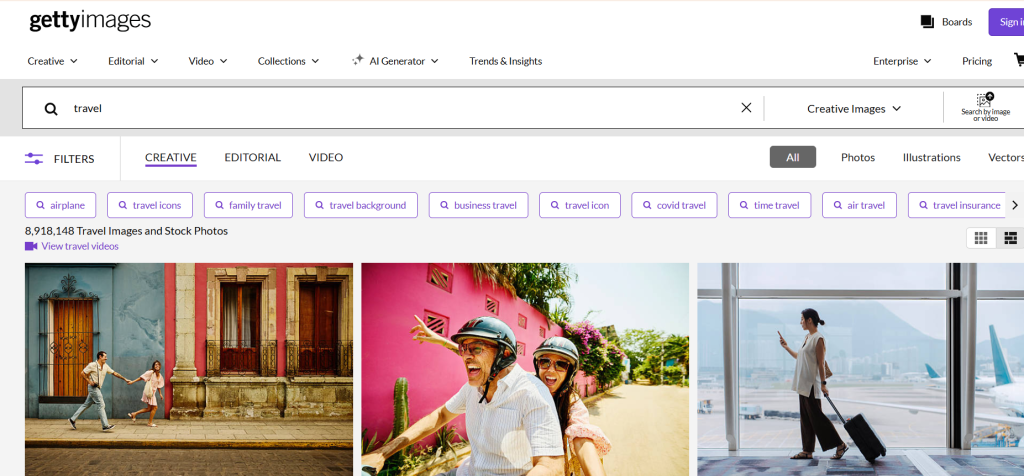
Getty Images is useful when your content needs a more editorial or high-end look. You can search through Creative, Editorial, and Video content, which helps you choose the right format for blogs, travel magazines, tourism reports, landing pages, and campaign banners. Its library also includes vectors, illustrations, and video clips, so it works for more than basic blog images.
However, Getty Images fits businesses with a higher image budget. Its royalty-free creative files can support many digital and marketing uses, but editorial images may have stricter rules. So, always check the license before using Getty visuals for ads, tour promotions, brochures, or commercial travel campaigns.
3. Unsplash
Unsplash is a strong choice when you want free travel images that feel natural, modern, and less like typical stock photography. Its open library includes over 6 million photos and illustrations shared by creators worldwide, which makes it useful for travel blogs, destination guides, trip planning content, and visual storytelling.

For travel topics, Unsplash covers broad image searches like travel, travel photography, travel blog, travel agency, travel app, travel advisor, and travel technology. This helps you find visuals for adventure posts, beach guides, city breaks, maps, airports, luggage, road trips, and lifestyle-based travel content.
Moreover, you can also filter images by license, orientation, and relevance, which makes it easier to pick the right image for a blog banner, website section, or social media post. In addition, Unsplash uses a simple and open licensing model that allows free use of all images for both personal and commercial purposes.
4. Pexels
Pexels is a widely used free stock photo platform that offers high-quality travel images and videos with a clean, modern style. It is especially popular among bloggers, marketers, and website owners who need royalty-free visuals without dealing with complex licensing or subscription costs.

The platform features a large, constantly growing library of curated photos and videos covering destinations, city life, nature, hotels, airports, road trips, and everyday travel experiences, making it suitable for a wide range of travel content needs.
For travel-related searches, Pexels provides well-organized categories and keyword-based discovery that make it easy to find visuals for topics like travel blogs, tourism guides and adventure. It also offers strong video content alongside photos, which is useful for websites, social media reels, and promotional travel campaigns.
5. Adobe Stock
Adobe Stock is a good choice for travel websites that need more than simple destination photos. Its travel search includes tens of millions of royalty-free photos, vectors, videos, and HD footage. You can find visuals for beaches, hotels, city tours, maps, travel business graphics, adventure trips, and tourism campaigns.

The best part of Adobe Stock is its connection with Adobe Creative Cloud. Designers can test watermarked images inside apps like Photoshop, Illustrator, and other Adobe tools before buying the final version. This helps when you need to design travel brochures, website banners, tour posters, social media graphics, or destination landing pages.
Adobe Stock also offers AI editing tools through Adobe Stock AI Studio. You can adjust backgrounds, colors, moods, and other visual elements before licensing. This makes it useful for travel brands that want custom-looking images without starting from scratch. However, always check the license type because standard, enhanced, and extended uses may apply to different assets and project needs.
6. iStock
iStock is a premium microstock photography platform owned by Getty Images, offering millions of royalty-free travel images, illustrations, vectors, and videos. The platform is known for its strong curation system, where content is carefully reviewed and organized into categories like travel destinations, lifestyle tourism, business travel, and adventure experiences.
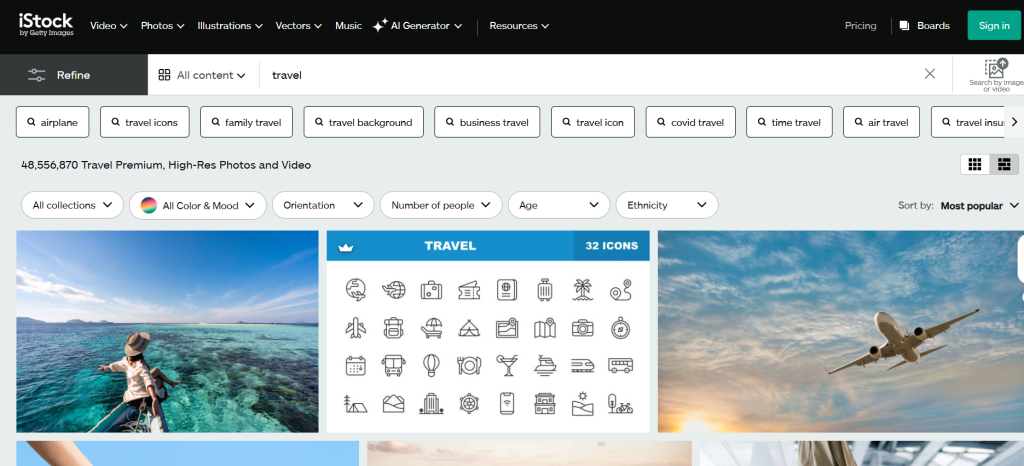
For travel-related searches, iStock offers a large collection of royalty-free travel stock photos covering airports, passports, luggage, airplane-window views, postcards, family vacations, business travel, city trips, outdoor adventures, and holiday experiences. This makes it useful for both general travel blogs and professional travel agency websites that need polished visuals for different types of content.
One thing that makes iStock different is its two main image collections. The Essentials collection is useful for everyday projects, while the Signature collection focuses on more authentic and exclusive images. iStock also offers credits and subscription plans, so users can choose between pay-as-you-go downloads or regular monthly downloads depending on how often they need royalty-free travel images.
7. Pixabay
Pixabay is a free stock media platform that provides a large collection of travel-focused images, illustrations, vectors, videos, and audio assets. It includes visual content covering destinations, landscapes, city environments, transport systems, hospitality settings, and general tourism scenes, making it suitable for a wide range of travel-related publishing needs.
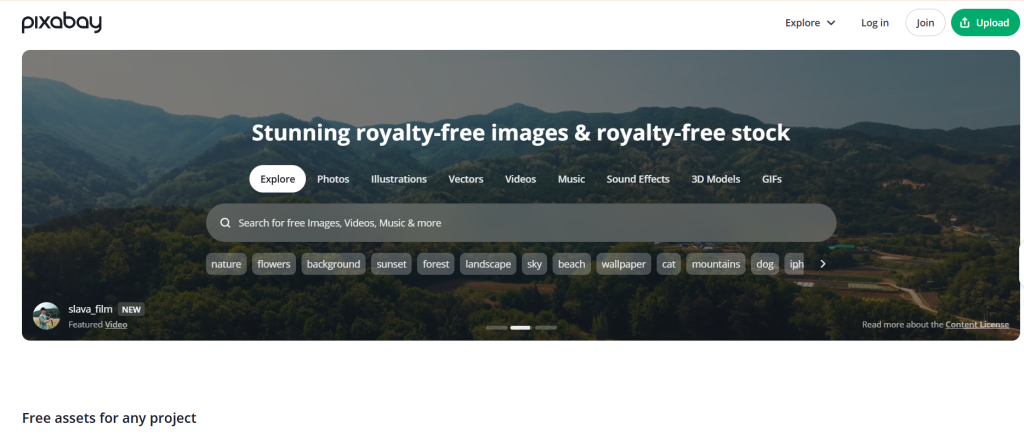
For travel searches, Pixabay delivers broad and varied results across themes like adventure travel, beach destinations, mountain regions, urban exploration, road trips, airports, and cultural tourism. The platform also includes video content, which supports travel reels, website headers, and promotional storytelling formats where motion visuals are required alongside static images.
Pixabay operates under a simplified royalty-free license that permits free use in both personal and commercial projects without mandatory attribution in most cases. Users are allowed to edit and adapt content, but redistribution or resale of the original files as standalone stock material is not permitted.
8. Depositphotos
Depositphotos is a global stock photography platform that provides royalty-free travel images, videos, vectors, illustrations, and audio files. It offers a very large library of over 300 million creative assets, making it suitable for travel websites, blogs, tourism campaigns, advertising creatives, and commercial design projects that require consistent and high-quality visuals.
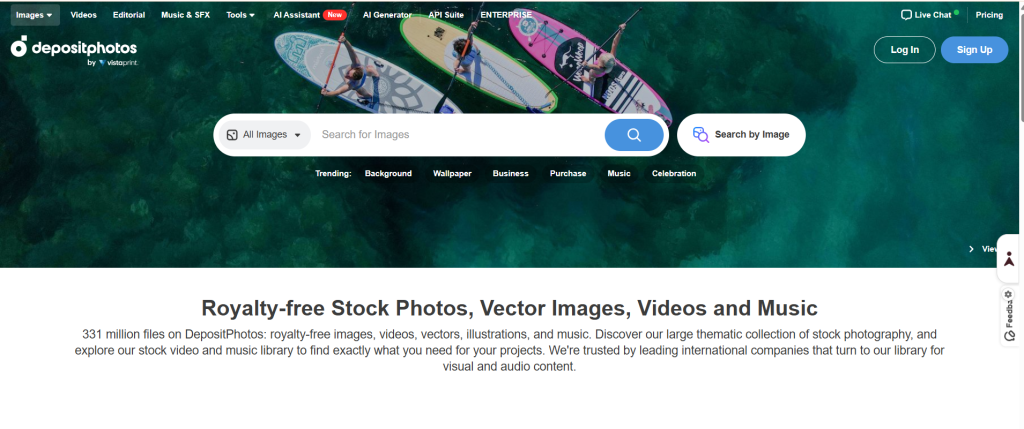
For travel content, Depositphotos can support both simple and design-heavy needs. You can use photos for blog banners, vectors for travel icons, videos for destination clips, and music or sound effects for travel reels. It also offers search filters, which help you narrow results when you need a specific image style, format, or content type.
Depositphotos also gives users more flexibility through subscriptions, on-demand downloads, and a free file library. It’s free collection includes high-resolution stock photos, vectors, editorial files, and videos, but attribution is required for free files. For paid downloads, the Standard License works for many common website and marketing uses, while the Extended License is better for larger print runs, merchandise, resale products, or wider commercial use.
9. Dreamstime
Dreamstime is a large global stock photography platform that offers royalty-free travel images, illustrations, vectors, videos, and audio content. It hosts one of the biggest contributor-driven libraries in the stock industry, with hundreds of millions of assets covering destinations, landscapes, city environments, tourism activities, and lifestyle travel visuals.
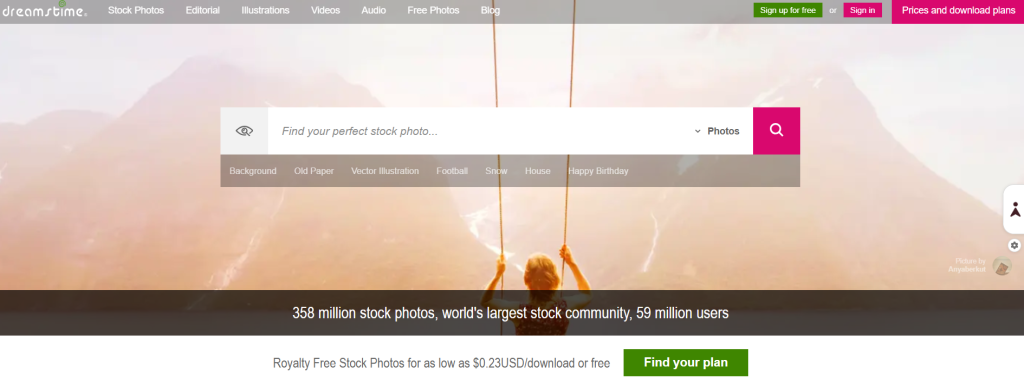
For travel-focused use, Dreamstime provides extensive coverage of categories such as city skylines, airports, cultural tourism, and adventure travel. The platform also includes editorial and conceptual imagery, which is often used in travel magazines, news features, and marketing campaigns where storytelling and context are important.
Moreover, its advanced search system helps users refine results by orientation, color, keyword relevance, and usage type, making it easier to find suitable visuals for both digital and print travel content.
10. Alamy
Alamy is a strong choice when you need travel images that feel more specific, authentic, and less common. Its collection includes stock photos, vectors, illustrations, 360° images, videos, live news, editorial visuals, and archive content. This makes it useful for destination guides, travel blogs, cultural stories, tourism reports, and location-based articles.
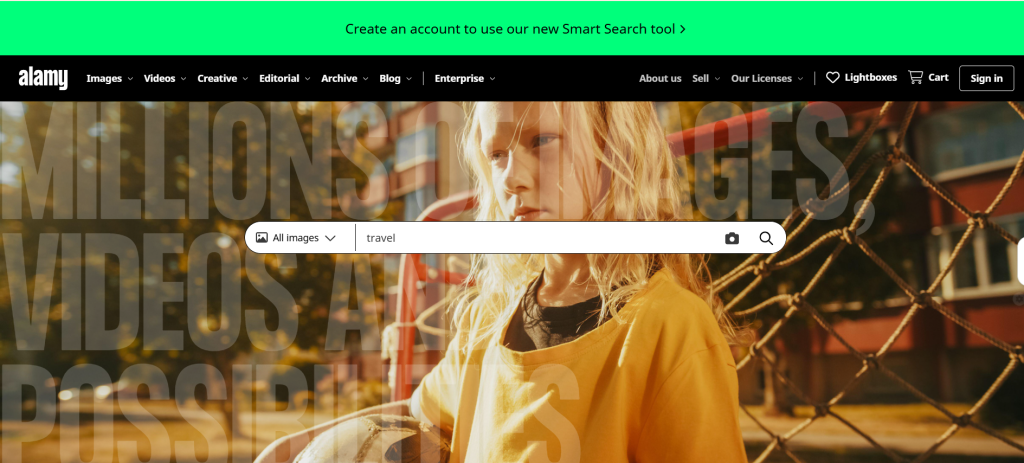
For travel content, Alamy works well when you need images of real places, local streets, landmarks, transport, festivals, nature, heritage sites, and everyday travel scenes. It is also helpful for topics where free stock sites may not offer enough depth, such as remote destinations, historical places, regional tourism, or editorial travel coverage.
Alamy supports both commercial and editorial use, but you need to choose the right license. Its royalty-free license can support repeated use across websites, social media, and print. However, editorial images may have limits and should not be used for ads, tour promotions, packaging, or commercial campaigns without proper clearance.
Ready to make your travel website more visual and engaging?
Turn your travel images into stunning trip galleries that inspire visitors to explore and book.
Get StartedFree vs Paid Stock Photo Sites: Which One Should You Choose?
Free stock photo sites are a good choice when you need simple travel images for blogs, destination guides, social media posts, or small website sections. Platforms like Unsplash, Pexels, and Pixabay offer free travel photos and videos that can help you create visual content without spending money. However, free images can be widely used by many websites, so your visuals may not always look unique.
Paid stock photo sites are better when you need professional image quality, wider collections, stronger search filters, and clearer licensing options. Platforms like Shutterstock, Getty Images, Adobe Stock, iStock, Depositphotos, Dreamstime, and Alamy give you more choices for travel ads, tour pages, brochures, destination campaigns, hotel marketing, and commercial website content.
The right choice depends on your purpose. Choose free stock photo sites if you need basic travel visuals for regular content. Choose paid stock photo sites if you need high-quality royalty-free travel images for business use, branding, advertising, or large marketing projects. For the best result, you can use both: free sites for general content and paid sites for important pages, hero images, ads, and tour booking pages.
You may also read: How to Become a Successful Travel Blogger?
Conclusion
Choosing the right stock photo site helps you find safe and high-quality travel images for blogs, websites, tour pages, and marketing content. Free sites work well for simple visuals, while paid sites offer more professional images, better search options, and stronger licensing for business use. Always check the license, commercial rights, and attribution rules before publishing any image.
After downloading licensed travel images, it is equally important to display them in a professional and engaging way. With WP Travel’s Advanced Gallery feature, you can add images, audio, videos, and YouTube clips to your trip pages. You can also present them in responsive grid, masonry, carousel, slider, and lightbox layouts without coding.
If your trip pages look plain or text-heavy, WP Travel Pro can help you turn them into visual booking experiences. Advanced Gallery works with existing WordPress gallery images, supports easy drag-and-drop media control, and uses lazy loading with compressed images for better performance. Upgrade to WP Travel Pro to unlock Advanced Gallery, along with 40+ other Pro features built for travel booking websites.
FAQs
1. Can I use images from Google on my travel website?
It is not recommended to use random images from Google because many of them are copyrighted. Instead, use trusted stock photo sites that clearly explain image licenses and usage rights.
2. Are free stock photos safe to use on travel websites?
Free stock photos can be safe if you download them from trusted platforms and follow the license terms. Still, check images with people, logos, landmarks, private places, or branded items before using them for business.
3. Do I need to give credit for stock photos?
Some platforms require attribution, while others do not. Unsplash and Pexels do not require credit, but some free files on other sites may need attribution. Always check the rules before publishing.
4. What is the difference between royalty-free and rights-managed images?
Royalty-free images allow broad use after a one-time purchase. On the other hand, rights-managed images require specific licensing based on usage, duration, and distribution.

Yam Chhetri is a WordPress expert specializing in travel plugins, themes, and website solutions. With 10+ years of experience, he helps tour operators and travel agencies find the best tools to build high-performing travel websites.
Yam provides expert insights on WordPress tour booking plugins, and travel website enhancements, helping businesses choose the right solutions. His in-depth plugin comparisons and industry analysis make it easier for travel entrepreneurs to navigate the digital landscape.